Best Portable Power Stations for Home Backup (2026): Picks by Budget
Five LiFePO4 units for outages, picked from maker spec sheets and independent published runtime tests. We have not bench-tested them ourselves.
We may earn a commission when you buy through links on this page, at no extra cost to you. This does not change which products we cover. How we make money.
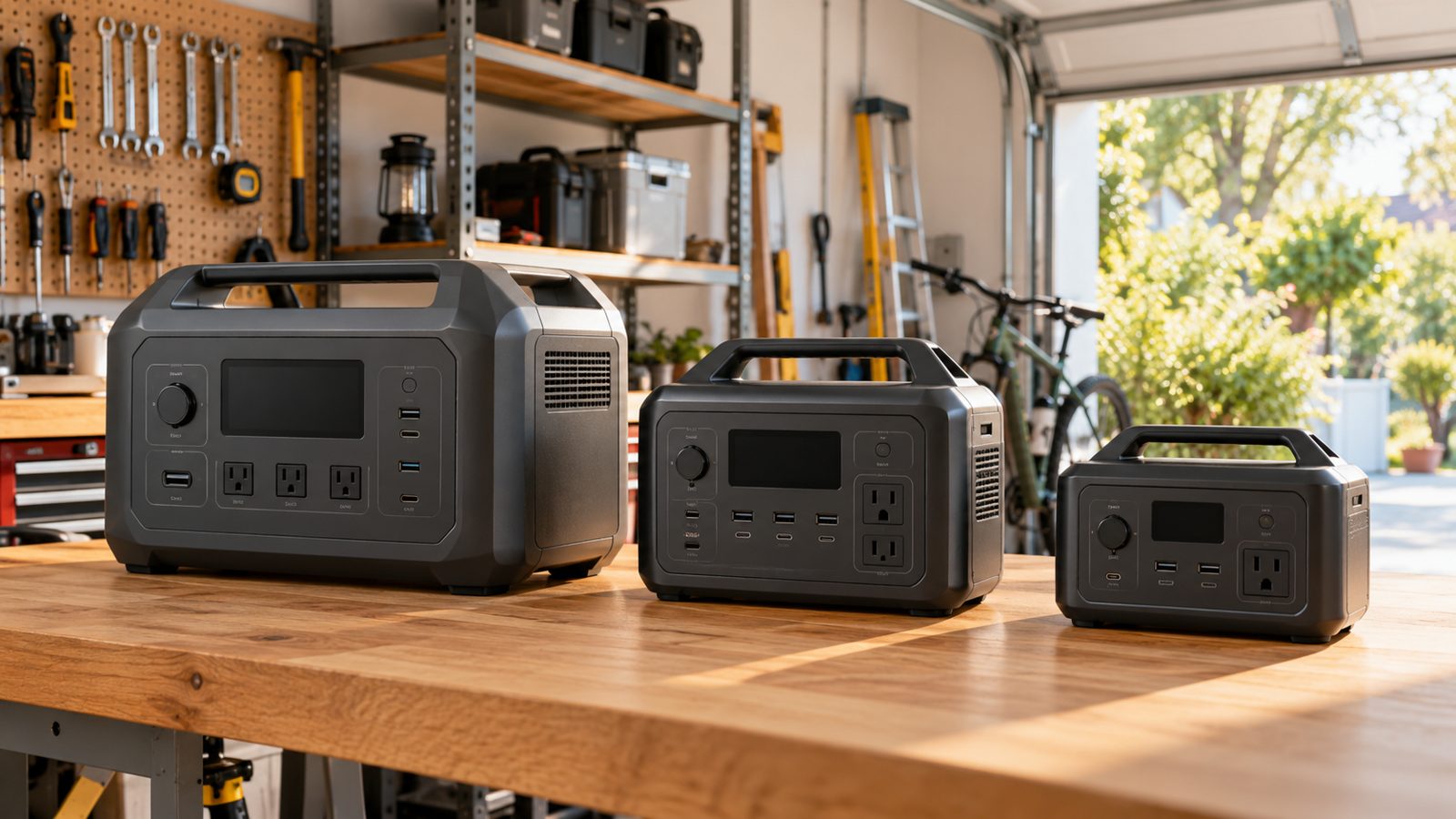
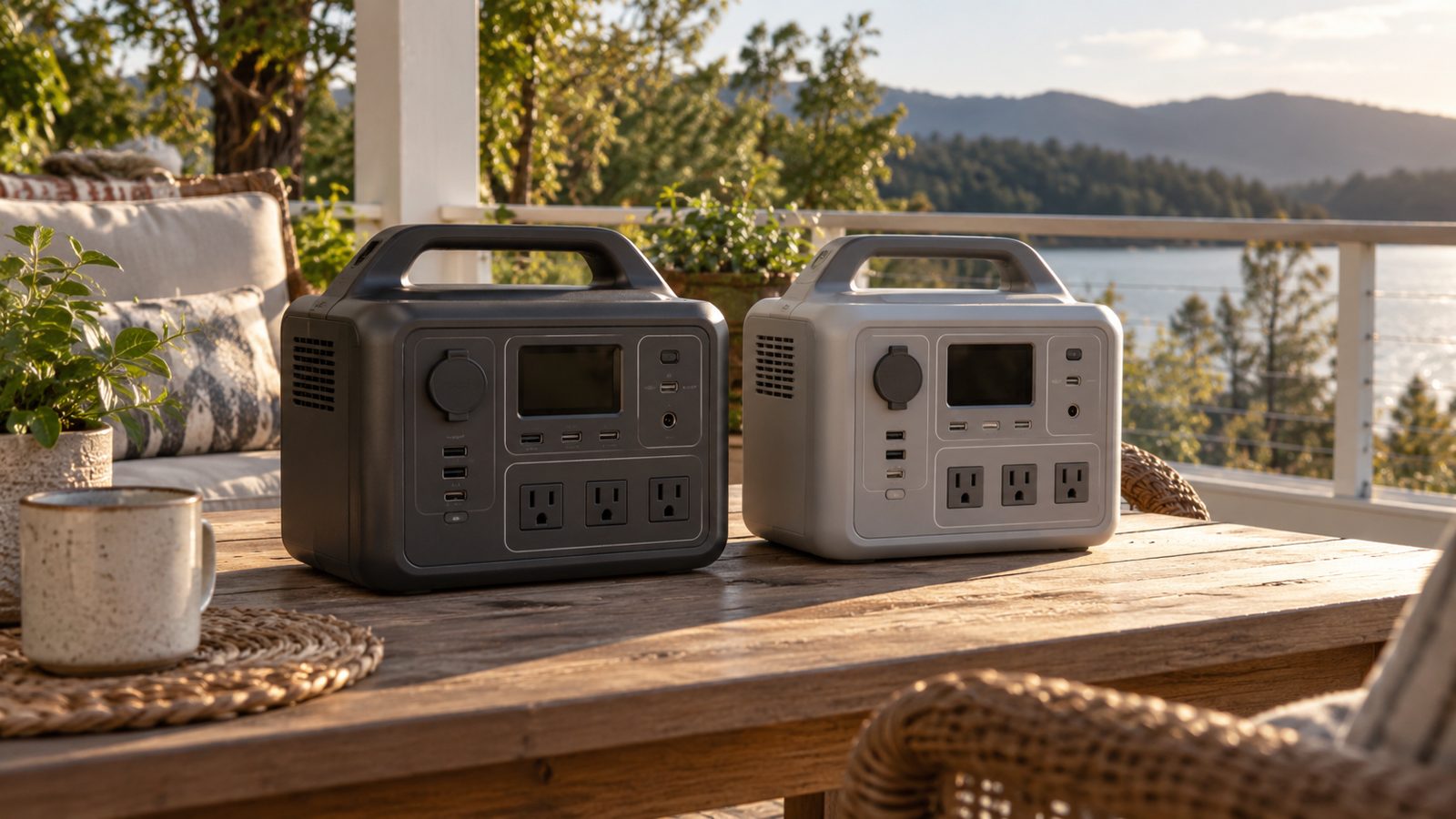
For home backup, start with a LiFePO4 station of at least 2,000Wh, UPS mode for the fridge and router, and 240V output if you have a well pump or other 240V loads. The Anker SOLIX F3800 Plus suits automatic panel backup, the EcoFlow DELTA Pro 3 suits expansion, and the Jackery Explorer 2000 v2 is the 2kWh unit you can still lift.
Quick picks
- Best for panel backupAnker SOLIX F3800 PlusCheck price
- Best expandableEcoFlow DELTA Pro 3Check price
- Best 2kWh you can liftJackery Explorer 2000 v2Check price
- Best starterEcoFlow DELTA 3 PlusCheck price
- Best budgetAnker SOLIX C1000 Gen 2Check price
Side-by-side specs
| Spec | Top pickAnker SOLIXF3800 Plus | ExpandableEcoFlowDELTA Pro 3 | Liftable 2kWhJackeryExplorer 2000 v2 | StarterEcoFlowDELTA 3 Plus | BudgetAnker SOLIXC1000 Gen 2 |
|---|---|---|---|---|---|
| Best for | Automatic circuit backup with a home panel | Whole-circuit home backup with 240V | A 2kWh unit you can still lift | Fast recharging and expandable home backup | Highest output in the 1kWh class |
| Capacityhigher is better | 3,840 Wh3,840Wh (up to 53.8kWh with 6 expansion batteries, per Anker) | 4,096 Wh★ Best4,096Wh (12kWh with 2 extra batteries) | 2,042 Wh2,042Wh | 1,024 Wh1,024Wh (expandable to 5kWh) | 1,024 Wh1,024Wh |
| Continuous AC outputhigher is better | 6,000 W★ Best6,000W total (120V/240V via L14-30R) | 4,000 W4,000W (6,000W X-Boost, 8,000W surge) | 2,200 W2,200W | 1,800 W1,800W (3,600W surge) | 2,000 W2,000W (3,000W peak) |
| Max solar inputhigher is better | 3,200 W★ Best3,200W total, 2 ports (1,600W each) | 2,600 W2,600W total, 2 ports | Not listed | 1,000 W2 × 500W (1,000W total) | 600 W600W (60V max) |
| Weightlower is better | 136.7 lb136.7 lb | 113.5 lb113.5 lb (51.5 kg) | 39.5 lb39.5 lb (17.9 kg) | 27.6 lb★ Best27.6 lb (12.5 kg) | Not listed |
| Voltage | 120V and 240V | 120V and 240V | 120V | 120V | 120V |
| Wall charging | 1,800W max (120V) | — | 1.7 h with Emergency Super Charge (maker figure) | 1,500W (0–100% in 56 min, maker figure) | 1,600W (full in 49 min, maker figure) |
| Battery | LFP, 3,000+ cycles | LFP, 4,000 cycles to 80% | LiFePO4 | LFP, 4,000 cycles to 80% | LiFePO4, 4,000 cycles to 80% |
| UPS | 20 ms switchover on the UPS outlets (maker figure) | — | ≤20 ms (maker figure) | <10 ms switchover | <10 ms switchover |
| Price | Check price | Check price | Check price | Check price | Check price |
Specs from each manufacturer's US product page. Bars compare each spec against the best value in this table; they are not test scores. Prices change often, so we link out instead of quoting them.
The picks
★Best for panel backup
Anker SOLIXF3800 Plus
Best for: Automatic circuit backup with a home panel
A 3,840Wh wheeled LFP station with 6,000W of 120V/240V output, 3,200W of solar input, an L14-30 port and expansion to 53.8kWh.
What we like
- 240V output and an L14-30 port for a transfer switch or inlet
- Largest solar input in this guide
- Works with the Anker SOLIX Home Power Panel
Watch out for
- 136.7 lb: it rolls, you will not carry it
- Anker notes 240V output is unavailable while charging from 120V AC
- Rated 3,000+ cycles, fewer than the DELTA Pro 3
Anker lists 3,840Wh, 6,000W of 120V/240V output and an L14-30R port, which is the plug most generator inlets and transfer switches take. It pairs with Anker’s SOLIX Home Power Panel for circuit-level backup, and solar input reaches 3,200W across two ports. In solarpowerauditor’s drill, it ran a fridge, freezer and router for 28 hours and delivered 3,448Wh measured. The trade-offs are 136.7 lb of weight, a 3,000+ cycle rating that trails the DELTA Pro 3, and Anker’s note that 240V output is unavailable while it charges from 120V AC. A widely viewed video on this setup (Spicer Designs) was sponsored by Anker, so weigh it accordingly.
★Best expandable
EcoFlowDELTA Pro 3
Best for: Whole-circuit home backup with 240V
A 4,096Wh wheeled home battery with 4,000W continuous output (6,000W with X-Boost), 120V and 240V output, and expansion to 12kWh per unit.
What we like
- 240V output for well pumps and dryers
- Large solar input
- Scales to whole-home systems
Watch out for
- 113 lb: it rolls, you will not carry it
- Needs a transfer switch or panel kit for circuits
The DELTA Pro 3 holds 4,096Wh, puts out 4,000W (6,000W with X-Boost) on 120V and 240V, and expands to 12kWh with two extra batteries. In solarpowerauditor’s drill it lasted the longest of the big units: 31 hours on a fridge, freezer and router, with 3,772Wh measured. The same test logged 34W of idle draw, so switch off outputs you aren’t using. At 113.5 lb it rolls on wheels.
★Best 2kWh you can lift
JackeryExplorer 2000 v2
Best for: A 2kWh unit you can still lift
A 2,042Wh LiFePO4 station with 2,200W output, a 1.7-hour emergency charge mode and a UPS switchover of 20 ms or less, at 17.9 kg.
What we like
- Lightest 2kWh-class unit in this guide
- UPS mode for fridges and routers
Watch out for
- 120V only
- Jackery lists the product page as not available for purchase at the time we checked
At 39.5 lb, the Explorer 2000 v2 holds 2,042Wh and puts out 2,200W, with a UPS switchover of 20 ms or less. Solarpowerauditor reports 39 hours in its fridge drill. It is 120V only, and Jackery’s product page showed it as not available for purchase when we checked, so confirm stock before you plan around it.
★Best starter
EcoFlowDELTA 3 Plus
Best for: Fast recharging and expandable home backup
A 1,024Wh LiFePO4 unit with 1,800W AC output, 1,500W wall charging and the option to add extra batteries for up to 5kWh.
What we like
- Two solar inputs totaling 1,000W
- Expands with extra battery packs
- Quiet below 600W (30 dB, maker figure)
Watch out for
- At 27.6 lb, about 4 lb heavier than the Jackery
- Expansion batteries cost extra
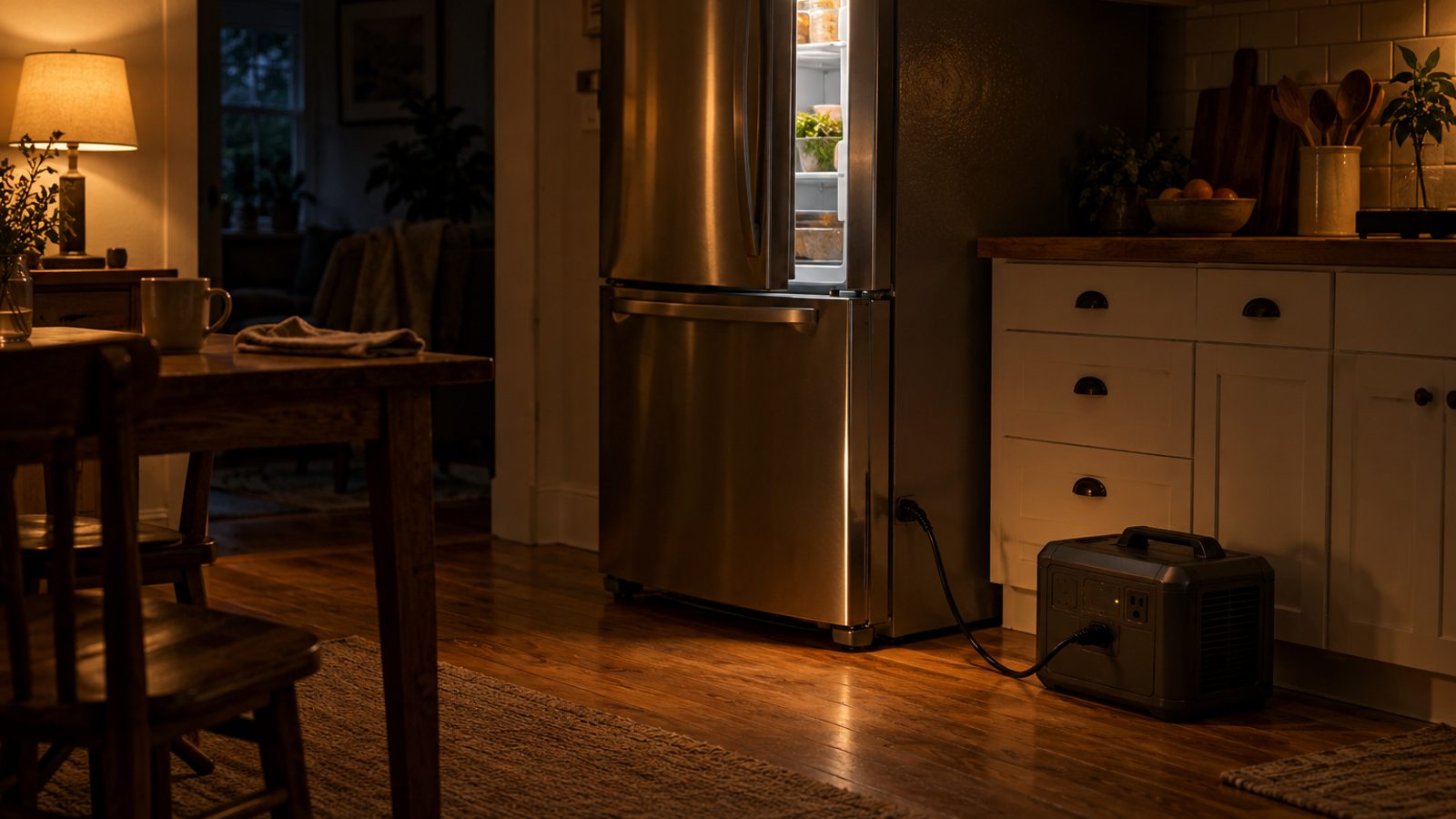
The DELTA 3 Plus starts at 1,024Wh and grows to 5kWh with extra batteries, so you can buy small now and add capacity later. EcoFlow quotes a 56-minute full recharge at 1,500W from the wall and a sub-10 ms UPS switchover. The 1kWh units in solarpowerauditor’s drills ran a fridge and router for 21 to 23 hours, enough for most overnight outages.
★Best budget
Anker SOLIXC1000 Gen 2
Best for: Highest output in the 1kWh class
A 1,024Wh LiFePO4 unit with 2,000W continuous output, 1,600W HyperFlash recharging and up to 600W of solar input.
What we like
- 2,000W continuous output
- Fast 49-minute wall recharge (app setting)
- TOU scheduling in the app
Watch out for
- Fast charging must be switched on in the app
- Not expandable
The C1000 Gen 2 has the highest output in the 1kWh class here, 2,000W from 1,024Wh, and Anker quotes a 49-minute recharge with HyperFlash switched on in the app. It can’t take extra batteries, so treat it as an overnight unit for the fridge, router and lights.
Also worth a look
- BLUETTI Elite 200 V2. Solarpowerauditor reports 2,073.6Wh, 2,600W output, a 6,000-cycle rating and 53.4 lb, and 41 hours on a fridge and router, the longest fridge run in its 2kWh drills. We couldn’t load BLUETTI’s own product page to confirm the specs, so it doesn’t get a card here yet.
- Fossibot F1800. A budget unit getting attention after UpsideDownFork’s review, which measured 81% efficiency. We haven’t verified its specs against a maker page, so we don’t rank it.
How the published tests measure runtime
The figures above come from three kinds of tests. Check for these when you read any review:
- Fridge hours: how long the station runs one real fridge (or fridge, freezer and router) from full to empty. CNET’s 10-model fridge test ran from 12.58 to 38.58 hours.
- Idle draw: what the station uses on itself with outputs on. CNET’s results show some units using 15 to 20% of their energy this way, and the DELTA Pro 3 drew 34W idle in solarpowerauditor’s drill.
- Switchover time: how fast UPS mode takes over when the grid drops. Makers list 10 to 20 ms for these units.
To estimate your own runtime, see how long a power station runs a fridge and our sizing guide. Not sure a battery beats a generator for your outages? Read power station vs generator.
What to check before you buy
- Continuous vs surge watts. Fridges and pumps pull two to three times their running watts for a second at start-up. Match the surge rating, then the continuous one.
- Recharge path. If outages last days, solar input matters more than wall-charging speed. See our solar generator buying guide.
- Expansion. The two EcoFlow units and the Anker F3800 Plus take extra batteries. If you might want more capacity later, start with one of them.
- Connection. For hard-wired circuits, read transfer switch vs interlock before you buy.
- Weight and where it lives. Under 30 lb, one adult carries it up stairs. Over 100 lb, it needs wheels and a flat floor.
Shopping for camping instead? See best power stations for camping and RVs, or compare brands in EcoFlow vs Jackery.
Frequently asked questions
Which models support a transfer switch?
Units with 240V output and a 30A locking port suit a transfer switch or inlet best. Of our picks, the Anker SOLIX F3800 Plus (L14-30R) and the EcoFlow DELTA Pro 3 list 240V. The 120V-only units can feed a 120V transfer switch or run appliances by cord.
Which of these are LiFePO4?
All five. Makers rate them between 3,000+ cycles (Anker F3800 Plus) and 4,000 cycles (EcoFlow DELTA Pro 3, DELTA 3 Plus and Anker C1000 Gen 2).
Is a sale on a power station ever real?
List prices on these units move often, and makers run frequent promotions. Compare the price against the same model at two or three retailers and check the bundle: a sale price that drops the expansion battery or solar panel may cost you more in the end.
What size portable power station do I need for a power outage?
List what must run at the same time and for how many hours, then add 15 to 25% for losses. Our sizing guide walks through it with worked examples.
Can I use a portable power station indoors?
Yes. A battery power station burns no fuel and gives off no carbon monoxide. Keep it on a hard, dry surface with its vents clear. Never run a gas generator indoors or in a garage.